


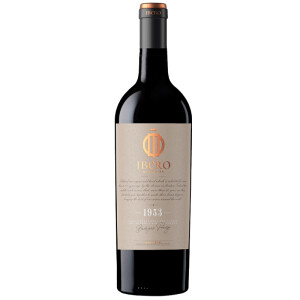
In this way, Cabernet Sauvignon wine grape has colonised lands in Californian Napa Valley and Washington State; on the Pacific coast of the United States and through most of South America. The Middle East and South Africa to the Coonawarra region of Southern Australia, because of the peculiar characteristics of the soil, the Cabernet Sauvignon wine grapes accentuate their menthol nuances with notes of eucalyptus.
In Europe, the Cabernet Sauvignon wine grape vineyards are present in all wine-making regions, especially in the Mediterranean basin, the Danube valley and the Black Sea. Although, areas with a lower tradition of grapes such as the United Kingdom or Germany have tried to cultivate Cabernet Sauvignon grape variety.
The Cabernet Sauvignon wine kernel is from a small and dark grain which grows next to a dark green, medium size leaf, which is hairy to the touch. The cluster is very small and of conical form, formed by berries of uniform size whose detachment is easy when they is fully ripe.
The grapes are hard and juicy and covered with a thick, very dark, bluish skin, and with a slight colour in the flesh when ripe.
Cabernet Sauvignon Wine Taste and Aroma
The Cabernet Sauvignon wine produced from itself, is characterized by its dark and intense colour. Its aroma reminds us of currant, mint, aromatic herbs and, of course, its characteristic hues of green pepper. When they age it brings out notes of chocolate and tobacco that fuse with the ageing aromas of the oak barrels.


